Jávea guide
Jávea (Xàbia in Valencian) is a town on the northern Costa Blanca, in Alicante province, between Cabo de San Antonio and Cabo de la Nao at the foot of the Montgó massif. It has three centres, the old town, the port and the Arenal beach, and a coastline of rocky coves with crystal-clear water. We, the owners of Villa Pinyes, wrote this guide from the questions our guests ask.
Which is the best area of Jávea to stay in?
It depends on what you want. The Arenal is the only sandy beach: promenade, restaurants and buzz; ideal if you don't want a car. The port is quiet and authentic, with the fish market, the promenade and the pebble beach. The old town, 2 km from the sea, is the Jávea of tosca stone, the Thursday market and tapas bars.
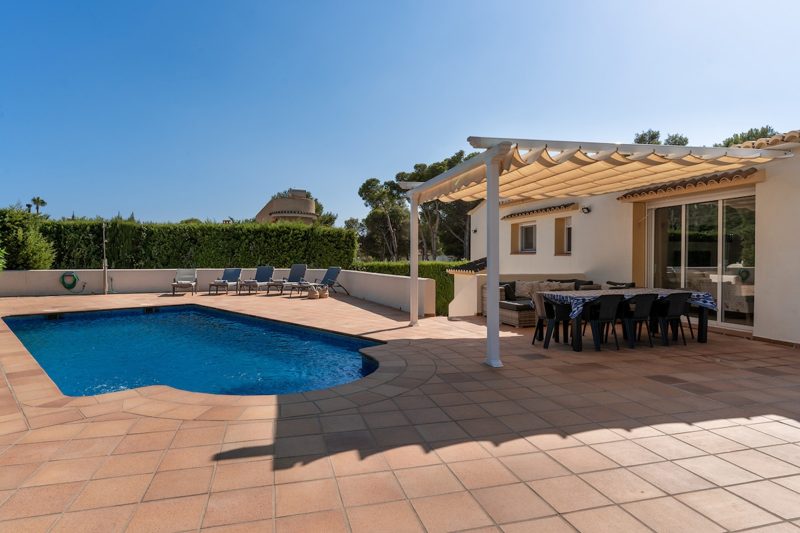
For a house with a pool and peace, the residential areas in the south, between Portitxol and Granadella: Balcón al Mar, Cap de la Nau, Costa Nova and Tosalet. Balcón al Mar, where Villa Pinyes is, is a residential area of villas on their own plots, 4 minutes by car from Cala Ambolo, 7 from Portitxol and 9 from Granadella, with a supermarket 15 minutes' walk away. A car is recommended here.
The coves of Jávea
Cala Granadella: the most famous, voted best beach in Spain several times. Small, pebbly, turquoise water, perfect for snorkelling and kayaking. In July and August it fills up by mid-morning and car access is restricted: go before 10 am.
Cala Portitxol (or Barraca): the one with the white fishermen's huts with blue doors and the island opposite. Pebbles, beachfront restaurants, very photogenic.
Cala Ambolo: wild, naturist, below a cliff; access is sometimes restricted due to rockfalls. Cala Blanca and Cala Sardinera: small and without services, for those seeking solitude. Arenal beach: fine sand and shallow water, perfect with children. La Grava beach (port): pebbles, with the promenade and the port bars.
Jávea with children
The Arenal is the easy beach: sand, shallow water, lifeguards, ice-cream parlours and pedal boats. Villa Pinyes has a pool heated all year, a cot and high chair, an enclosed garden and a single storey with no stairs. Plans that work: kayak or pedal boat at Portitxol, the tourist boat from the port, the Sèquia de la Nòria park, the Cabo de la Nao viewpoint and an afternoon at the old-town market (Thursday mornings).
Things to do and day trips
Climb the Montgó (753 m, 3–4 hours round trip, best in spring or autumn), the Route of the Viewpoints (15 signposted miradors along the coast), the lighthouses at Cabo de la Nao and Cabo de San Antonio, snorkelling in the marine reserve, diving, paddle boarding, and the Jávea Golf Club (9 holes).
Day trips from Balcón al Mar: Dénia (25 min, castle and port), Moraira (20 min), Calpe and the Peñón de Ifach (35 min), Altea (45 min), Guadalest (1 h), the Algar waterfalls (1 h), Valencia (1 h 30) and Alicante (1 h 20).
When to go: climate by season
Jávea has over 300 days of sunshine a year. Summer (June to September): 28–32 °C, sea at 25 °C, the high season. Spring and autumn (April, May, October): 20–25 °C, the sea is still swimmable in October, empty beaches; for many the best time. Winter (November to March): 15–18 °C by day, clear skies, sunny terraces; with a heated pool it makes for a very comfortable long stay, which is why many guests from northern Europe come for a whole month.
Festivals: Fogueres de Sant Joan (late June), Moors and Christians (mid-July), Mare de Déu de Loreto in the port (first week of September) and the weekly Thursday market.
Getting there and getting around
Alicante airport (ALC) is 103 km away (1 h 20 min via the AP-7) and Valencia airport (VLC) 131 km (1 h 30). The most practical option is a hire car from the airport; Villa Pinyes has parking for 4 vehicles. There are buses from Alicante and Valencia (ALSA) to Jávea, and taxis or private transfers (€90–120 from Alicante). Within Jávea, to get from Balcón al Mar to the coves, the Arenal or the old town, a car is the norm; there is a local bus in summer.
Renting a villa in Jávea: what to know
Villas with pools are booked months ahead for July and August; for spring, autumn and winter there is more availability and better prices. Villa Pinyes is let seasonally from 11 nights, with a direct contract, final cleaning and deposit; the price includes bed linen, towels and beach towels, and the heated pool. Pets are welcome.
Frequently asked questions
Jávea or Dénia, which is better to stay in?
Jávea is more residential and about coves; Dénia is more of a city, with a castle, more restaurants and the ferry to the Balearics. They are 25 minutes apart, so from Jávea you can visit Dénia in a day.
Do you need a car in Jávea?
If you stay on the Arenal, no. Anywhere else, including villa areas like Balcón al Mar, yes: the coves and the three centres are several kilometres apart.
Which is the prettiest cove in Jávea?
Granadella is the most awarded and Portitxol the most photographed. Ambolo is the wildest. With small children, the Arenal.
Can you visit Jávea in winter?
Yes. From November to March it is 15–18 °C by day with sunshine almost every day. Villa Pinyes has a heated pool and heating, and many guests stay for a full month.